Monday, January 30, 2017

Soul Mates...Fact or Fiction?


“I’m so nervous to get married,” my 17 year old daughter stated. “What if I don’t find my soulmate?” Her younger sister echoed the same feelings. “Soulmates?” I thought. Where did they get this idea? Must come from the movie industry where the beautiful young girl meets the gorgeous man of her dreams and they have a romantic fling in Paris and they share the same goals and dreams and….blah, blah, blah. Too many chick flicks. “Don’t worry,” I told them. “There’s no such thing as just one person for you.” My false perception that this would be a comfort for them, has now led to a 2 week long conversation to convince them that there was hope for more than one "perfect person” out there for them, and if they don’t find them, they will never find true happiness.

So I got curious, what do my married friends think? Maybe they can provide some insights into what to say to my teenage daughters. I was surprised that 2 out of 6 of the friends I asked said they believed in soul mates as well. Hopefully, they also believe they are married to theirs. The other 4 had some good points, I thought. One pointed out that if there were only one person out there meant to be with us, we could miss some “cosmic sign or whatever and miss our chance to be with them.” Well, after reading some council on marriage this week, I came across some great thoughts on the subject that the majority of my married friends seemed to echo. In my reading, a marriage researcher, Scott Stanley, compares marriages to the stock market. He explains that marriage is a long term investment and satisfaction levels go up and down over time, some more than others. But he also noticed that “long-term commitment will carry you through the ups and downs of married life…Most who consistently invest in their marriages will do very well over the long term.” Marriage takes hard work, selflessness, and sacrifice. My reading goes on to state that “as expectations for sacrifice spiral downward, expectations for our ‘soul mate’ spouse ascend higher and higher.” I love the term that Scott Stanley used next, “soul-mate-ism.” This is what occurs when one becomes obsessed with “completely unrealistic expectations of a union devoid of irritation, personality differences, and the need to compromise. Soul-mate-ism conveys an expectation of heavenly connection that makes earthbound relationships more difficult.” How stressful to think that my husband might expect so much perfection from me as his perceived chosen soul mate! If I don’t live up to his expectations, he might think “well, guess she wasn’t the one for me” and move on to find someone that better fits the bill. 
( Hawkins, Dollhite, & Draper, Successful Marriages and Families, 2012)


A more comforting thought came from a man I trust and respect very much, Spencer W. Kimball, who was I believe, a modern prophet on the earth. He stated,
Sign me up for that marriage please! This is also very similar to the thoughts that the majority of my married friends shared. I am nowhere close to perfect, and neither is my husband. After the initial honeymoon phase was over, I began to notice just how much this was true. The excitement of new love and the perception of a perfect companion while dating gradually wears off. You begin to notice little annoyances and more imperfections pop up. My husband used to drive me crazy with leaving open the cabinet doors. I’m sure every couple feels initial frustration at the discovery of little habits they didn’t know their “perfect mate” possessed…leaving the cap off the toothpaste, stealing the covers in bed, leaving their socks in the bathroom, drinking straight from the milk carton…the list could go on and on. The important thing is that we don’t dwell on these annoyances. If I was not careful, I could begin to wonder “What if I made the wrong choice? There were other prospects out there for me, maybe I chose the wrong one? Would I be happier with someone else?” I have learned that rather than trying to mold your spouse into your model of perfection, you should take a look at what you can do to serve them. Your love and appreciation grows through acts of service. Spencer W. Kimball also stated:
I so love that thought. Marriage is meant to be a partnership, where each person plays an equal part. We both have different roles and responsibilities, and no one is perfect, but together we grow and learn. It is not always easy and I guarantee there will be bumps in the road, but if we are willing to put forth the effort and set our selfish expectations aside, there will be no room for “what if’s" or a continual search for our one, true "Soul Mate."

Marital Transformations


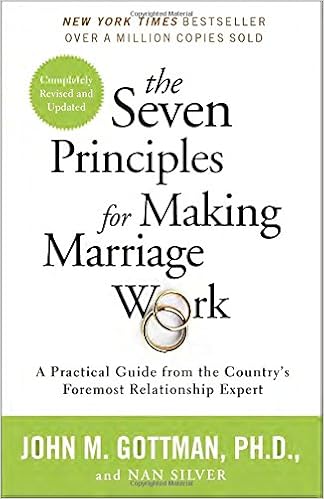
After learning more about the concept of soul mates, I began to think about just how much effort it takes to create a happy and successful marriage. Bumps in the road will inevitably come and there will be days we feel like giving up. As a stay at home mom to 5 kids, I have had a good deal of these days. I have felt physically, emotionally, and mentally drained by 4:00 pm. The problem is that my husband gets home around 6:00 pm, and I admit to having taken my frustrations out on him. Disagreements are had, tempers lost, money seems always tight, and believe it or not we don’t always have the same goals in mind. Being the work in progress that I am, and fully aware of my needs to change, I feel compelled to apply the principles of John Gottman, one of the world’s leading marriage researchers, therapists and author of The Seven Principles for Making Marriage Work. He has provided a list of genius and quite simple steps for peacefully handling differences and solving problems. Okay, so not all of them are simple, because some might require change, or in a different term I read this week a “transformative process.” Changing and transforming is hard work, just like marriage. Both require humility, commitment, sacrifice and forgiveness.
 
I believe in tackling change one step at a time. Once I become better at one thing, I move on to the next. Gottman suggests that in order to handle differences and problems, we need to apply prevention strategies. I have spent the majority of my 18 ½  yearlong marriage working on the first suggestion which includes letting go of “trivial matters,” like when my husband used to leave open the cupboards. I'm over it now, I promise. Another suggestion we try to follow is having regular couple counsels where we discuss the family, our marriage, or other issues. Whenever I ask people what the number one key to a happy marriage is, I always hear “communication” on the list of must's. This goes to show that experience has proven you can’t grow together or have a very successful marriage without it. The people and the experts have spoken! 

The next suggestion is one I need a little more work on. As I mentioned, sometimes when I get tired, angry or frustrated I take things out on my husband. If I am directly angry or offended at something he said or did, I will most likely try to avoid him or give him the silent treatment. Like I said, I’m far from perfect. Gottman says to eliminate these “destructive interaction patterns.” Get rid of the criticism, contempt, defensiveness, stonewalling, escalation and invalidation. These are not effective ways to get your point across and will only make things worse. While I work on that transformation, I will put the next suggestions on my to do list. They include things like calming yourself down before and during communication, bringing up concerns in a soft and gentle way (without blame, criticism or negative remarks), learning how to de-escalate, apologize and acknowledge your own faults and your partners strengths and attempts, and discussing solutions that both can agree with. One specific suggestion that Gottman offered was to use "I statements." He says "complaining is okay, but don't blame. Speak for yourself. Use "I" statements to communicate your feelings (I felt hurt when you left me alone at the party), not "you" statements (you are so inconsiderate)."

I look at these suggestions and think 
overall these things require us to 
be humble. A little saying we
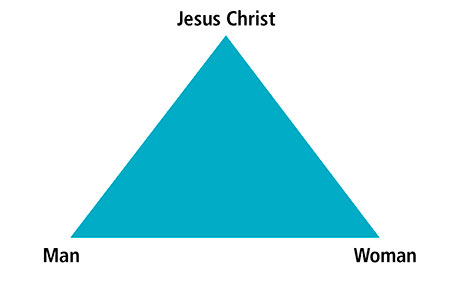
hear all the time is “What would Jesus do?” As cliché as this is, it is a good question to ponder. If I am acting in a way that is not in line with the example of the Savior, I need to re-evaluate and transform my actions and thinking. Something I loved this week was a point made by David A. Bednar. He explained that marriage is like a triangle with the Savior at the top and the husband and wife at each lower corner. As the husband and wife each come closer to the Savior, they also grow closer to each other. I’ve learned over time that the triangle is one of the strongest forms in architecture. If one side is broken, the strength is lost. So we too cannot break the connection between any side of our marital triangle, or the marriage will weaken. I have also learned from personal experience that when I am not doing what I should be to draw closer to the Savior, I am more impatient and unloving towards my husband. By following the example and teachings of the Savior, and working on transforming into a better spouse, I know I can become better at peacefully handling differences and creating more love in my relationship.

Sunday, January 22, 2017

A Plan of Happiness

I attended a funeral yesterday of an amazing man. This man was a father, a husband, a brother, a son, a bishop, a missionary, and a friend. He was an enduring example of Christlike love and service. The chapel where his funeral was held was full of people who had felt the influence of this mans love and kindness in their life. For such a fulfilling life, one might think that he must have been very old, but to the contrary, he was only 66. He was in good health, as far as anyone knew, and died unexpectedly in about a peaceful 10 minutes time.

To most, this seems much too soon to be taken from this earth and while most also might expect his funeral to be full of mourning and confusion, his was not. The messages shared at his funeral were ones of hope and peace. A dear mutual friend of ours and influential leader of the local congregation of our faith in the southern Milwaukee area (a counselor in what we call the stake presidency) gave a eulogy which highlighted the blessings of what many refer to as the plan of happiness. This is a well known doctrine in our church, and one that provides clarity, hope and purpose to life. As a part of this plan, which was laid out by our loving Father in Heaven, we are able to return to live with our families in the presence of God for eternity after we die. I have heard that this is a rather unique concept among religions, and one that brings many to the gospel of Jesus Christ that I believe to be true.

This plan not only provides me with the hope of reuniting with my lost relatives and friends like the one that passed this week, but it clarifies the importance of families on the earth. It is the same plan the Jesus Christ presented in his gospel while on the earth. After time had past when Christ was no longer on the earth, many important parts of this plan were lost and forgotten. People became confused and followed after their own ideas. My church believes that this doctrine was restored through the revelation of a modern day prophet, Joseph Smith. This doctrine emphasizes 3 important "pillars" in the plan of happiness. The creation of the earth and man, the fall of Adam and Eve, and the atonement of Jesus Christ. These three vital occurrences are what allow us to live in families now and forever. Let me explain...

The creation  provided us with a place to live with earthy parents and physical bodies. The fall allowed us all to be born into this world and to experience life at its fullest. Complete with ups and downs, happiness and tears, the gift of agency in our mortal life enables us to create our own families and destinies. Last, the atonement makes our lives worthwhile. It provides us with the gift of being able to return back into the presence of our Heavenly parents, even though we may sin and stumble. We repeat this pattern regularly throughout our own lives. We experience our own creations of children, new jobs and other opportunities. We experience falls as we may stumble, confront failures, challenges and opposition. We then turn to the power of the atonement as we seek for comfort and healing.

I am so grateful to understand a plan that provides clarity and purpose to my earthly life and relationships, and peace and comfort that death is not the end. I have experienced the loss of many loved ones in my life. The most significant was my own mother, who died when I was only 12 years old. I look forward to the day when we can be reunited as an eternal family, along with others who have passed including grandparents, aunts, uncles, brothers, a sister and cousins. The plan that allows this to happen is a plan of salvation, and it truly does bring me happiness in my life.